

Would A Solar Flare Harm A Digital Camera?
A 'mixed up' sunspot just fired off a huge solar flare
Scientists are keeping an middle on a sunspot that fired off an X-grade flare while "having an identity crisis," according to SpaceWeather.com.
Amplified aurora displays are possible if a coronal mass ejection of charged particles emerges from the "mixed-up" sunspot AR3006, which pointed its flaring blast toward Earth Tuesday (May 10) at nine:55 a.m. EDT (1355 GMT).
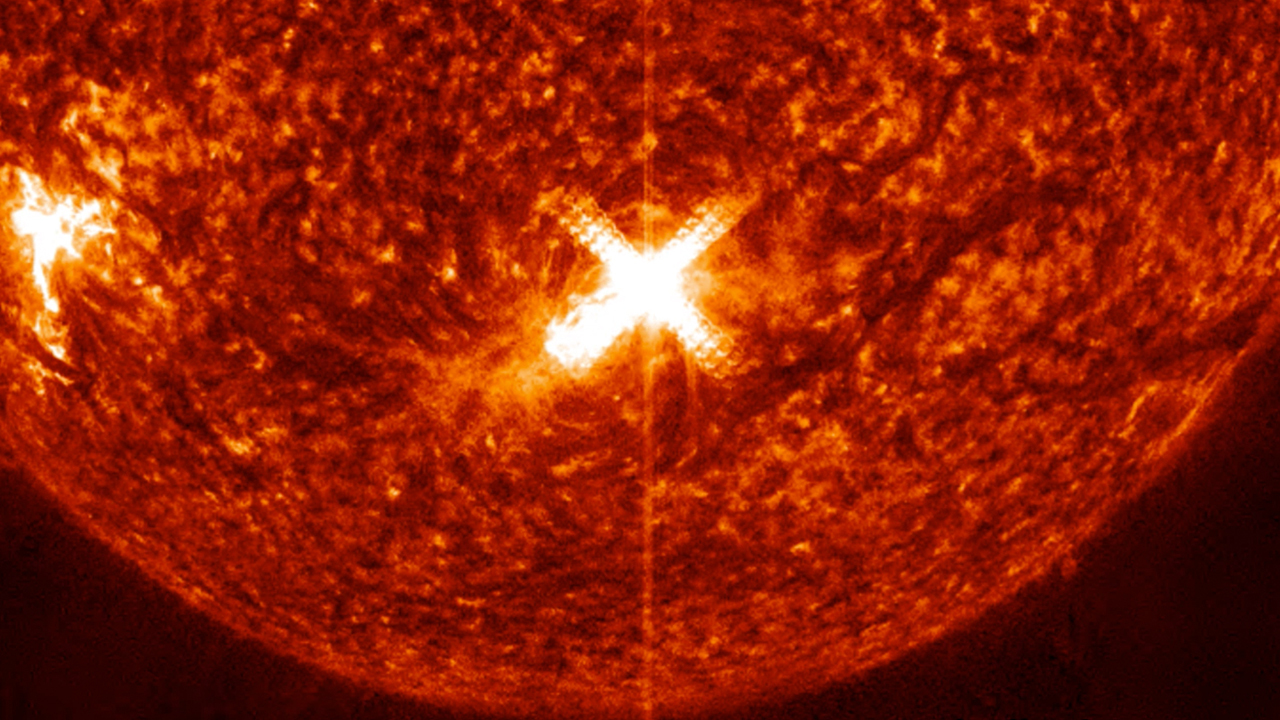
The solar flare was caught on photographic camera by NASA'southward Solar Dynamics Observatory and spurred a radio emission alert by the National Oceanic and Atmospheric Administration (NOAA), amid a reported shortwave radio blackout in the Atlantic Sea region.
Related: The lord's day'southward wrath: Worst solar storms in history
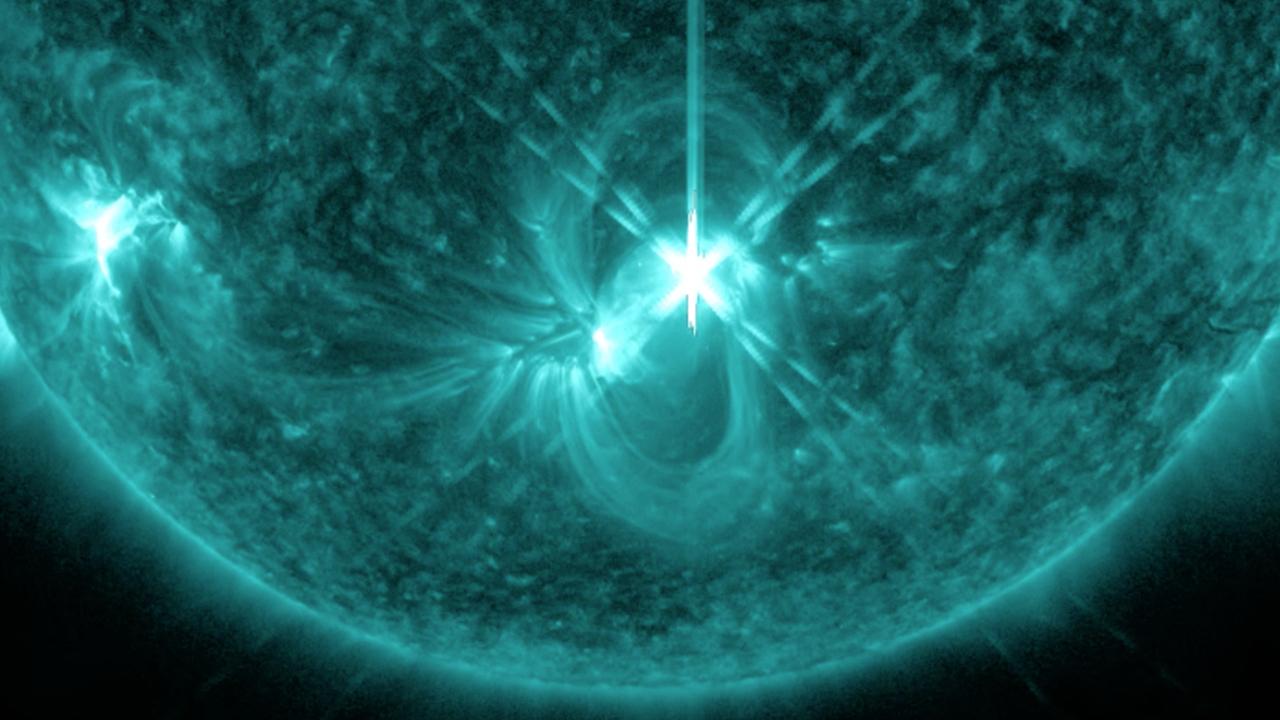
AR3006'due south polarity is the contrary of what scientists are expecting, which makes the sunspot "interesting and dangerous," SpaceWeather.com stated. (Sunspot polarity is governed past the current solar cycle.) "If AR3006 flares today, it will be geoeffective. The sunspot is direct facing Globe," the website added.
According to NOAA's Space Weather condition Prediction Center, which monitors solar flares and other outbursts, a coronal mass ejection (CME) may follow today's flare. CMEs are massive outbursts of solar material burped out by the sunday, and scientists can predict whether one will follow a flare based on the radio signature. As of nearly 12 p.m. EDT (1700 GMT), the agency said that a CME "may be likely," pending further observations.
In general, auroras may happen if a CME happens to intersect with our planet's magnetic field lines. Normally the result is a harmless sky bear witness equally atmospheric molecules of gas glow.
Today's flare was classified as an X1.v-form event, making it on the weak side of the strongest category of flare. The sun has fired off several explosions of about the same force in the past month, along with a bunch of moderate-sized flares. The dominicus's peak activeness is expected to occur in 2025, simply at that place are numerous sunspots on its surface right now.
More rarely, CMEs can generate trouble in effective infrastructure such equally power lines and satellites, which is why scientists keep such a close centre on space weather through numerous missions gazing at our lord's day.
Both NASA and NOAA monitor the sun all the fourth dimension; in addition, NASA operates the Parker Solar Probe mission, which is periodically zipping very shut to our sunday to empathize how its superheated outer atmosphere affect solar flares and other phenomena.
Follow Elizabeth Howell on Twitter @howellspace . Follow us on Twitter @Spacedotcom or on Facebook .
Join our Space Forums to continue talking space on the latest missions, night sky and more! And if you take a news tip, correction or annotate, let the states know at: community@infinite.com.
Source: https://www.space.com/huge-solar-flare-mixed-up-sunspot-may-2022
Posted by: hainesbrelf1988.blogspot.com
0 Response to "Would A Solar Flare Harm A Digital Camera?"
Post a Comment